
Before speed, comfort, or technology, a yacht has always been an object capable of inspiring emotions. Her primary purpose is certainly to navigate the seas, but her identity goes far beyond her purely technical aspects. A yacht tells a story, reflects a vision, and represents the taste and personality of her owner. And perhaps no other element has influenced this perception more than aesthetics.
Elegance and Aesthetics: Value Beyond Function
A yacht is created to sail, but the moment she enters a harbor represents something far beyond the simple end of a voyage. It is at that very moment that functionality takes a secondary role, and attention shifts to the lines, proportions, details, and overall harmony that define the vessel. For centuries, elegance has been considered an essential component of naval architecture.
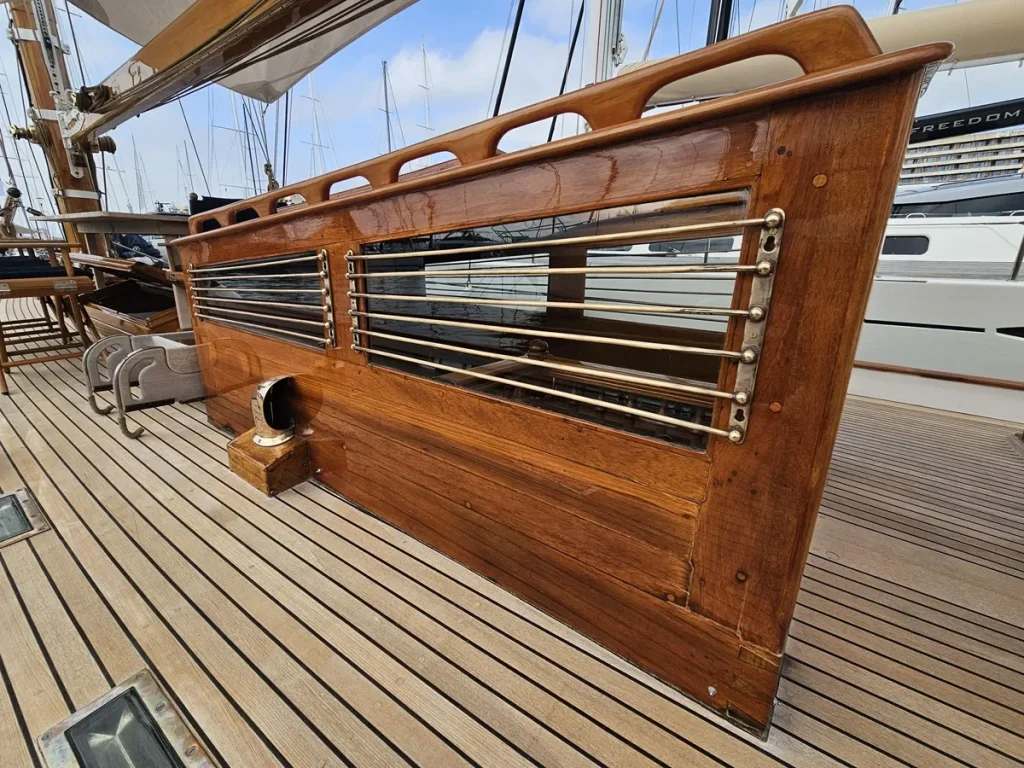
The great designers of the past were not only focused on building efficient vessels, but true floating works of art. The graceful lines of a yawl, the curve of a canoe stern, the rake of a mast, or the craftsmanship of a polished bronze fitting were all elements studied with the same attention devoted to performance and seaworthiness. It is no coincidence that many classic yachts continue to fascinate owners and enthusiasts today.
Their timeless beauty conveys emotions that go beyond technology and dimensions. Looking at a classic yacht often means being transported to another era, when design was guided by the pursuit of harmony and proportion before the principles of industrial optimization.
But what has changed?
Part of the answer can probably be found in the economic and social evolution of recent decades. The increasing cost of skilled labor, the rising price of raw materials, and the constant need to reduce production costs have inevitably influenced the final product.
Creating refined details requires time. Time requires expertise. And expertise comes at a cost. Many elements that were once crafted by hand have today been simplified, standardized, or removed in order to make products more competitive. Added to this is another phenomenon that has profoundly transformed the industry: globalization. In the past, it was often the builders who shaped market trends. The great shipyards and most influential designers proposed their own vision, and owners chose to identify with those philosophies and styles. Today, the opposite frequently occurs. Manufacturers are increasingly required to adapt their products to the demands of a global market that is broader, more diverse, and increasingly driven by commercial considerations.
The search for widespread acceptance naturally favors solutions designed to appeal to the largest possible audience. Shapes, layouts, and styles are often developed to satisfy market expectations rather than to express a unique vision. While this approach can deliver significant commercial success, it may also reduce the identity and individuality of the final product.
The inevitable question therefore arises: is adapting to the expectations of the majority truly the path to excellence?
The history of design, art, and yachting seems to suggest otherwise. The creations we remember, the yachts we still admire today, and the designers who have left a lasting legacy were not those who simply followed contemporary trends, but those who had the courage to introduce something different. Perhaps excellence is born from the ability to dare.
From pursuing a clear and distinctive vision rather than constantly following market demand. From creating products that do not merely satisfy an existing need, but that are capable of generating new aspirations. Paradoxically, in an era dominated by standardization, aesthetics may have an even greater value than in the past.
Today, we are surrounded by products that increasingly resemble one another. For this reason, authentic elegance, personality, and attention to detail become powerful elements capable of distinguishing one creation from all others.
A classic yacht reminds us of a fundamental truth: beauty is not an accessory. It is an integral part of the value of the creation itself.
And when proportions are right, details are carefully crafted, and the lines of a yacht have the power to create emotion, time becomes irrelevant. What remains is what every great project should leave behind: an impression destined to last far beyond its simple function.