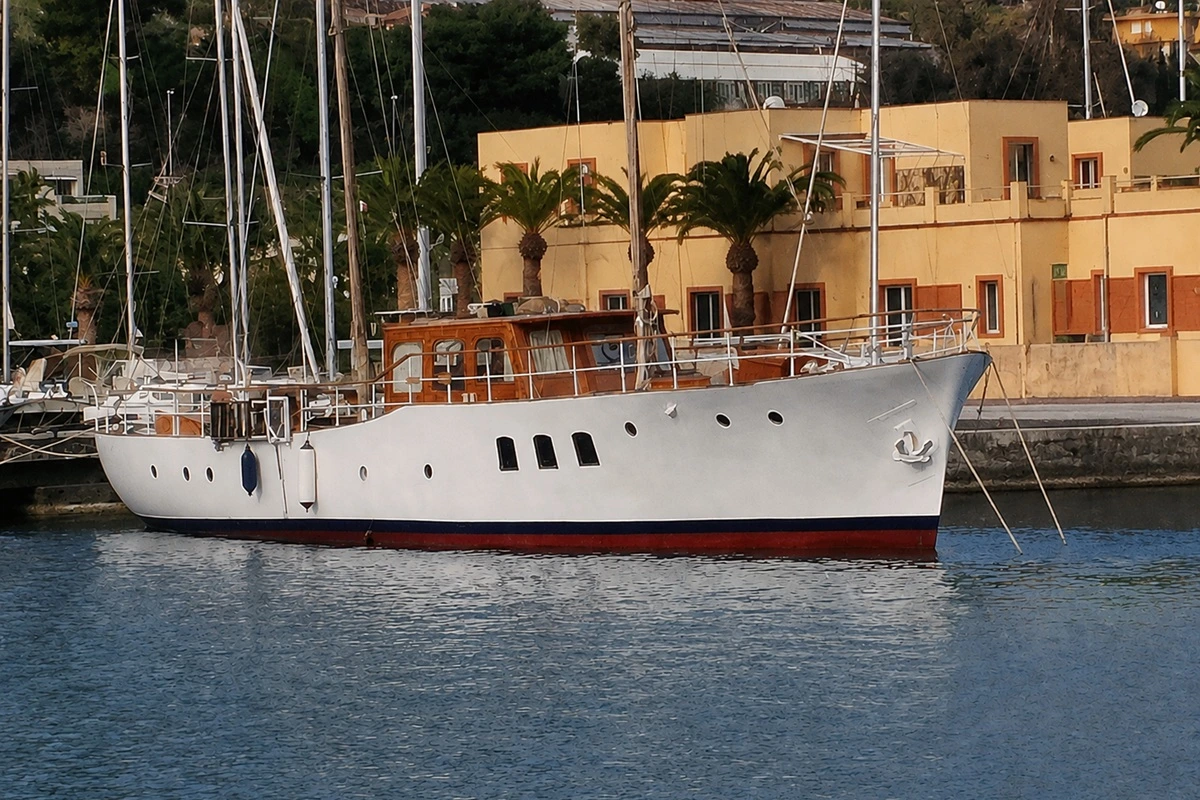
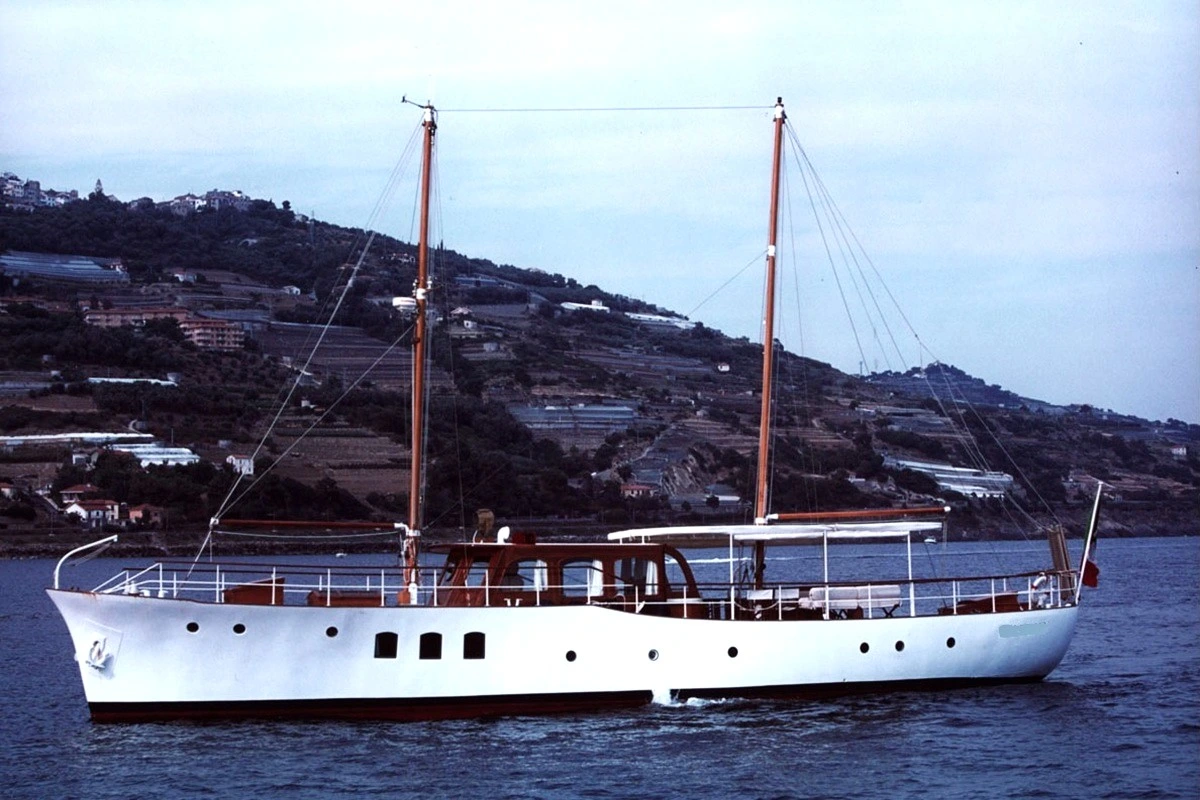
Launched in Amsterdam in 1938 by the renowned Dutch shipyard De Vries Lentsch, Posidonia is a remarkable example of the classic Dutch yacht-building tradition of the pre-war era. At 70 feet in length, she belonged to a series of sister yachts built by De Vries Lentsch during the 1930s. Designed with a long, elegant profile, a relatively low superstructure and a pronounced seagoing character, these yachts were recognised for their distinctive lines and their ability to combine elegance with substantial seaworthiness.
Built in steel, Posidonia was conceived as a luxurious yacht, with a layout and construction philosophy reflecting the standards of a period when craftsmanship, functionality and individuality were fundamental elements of yacht design. Her history is closely connected with the Mediterranean. After the Second World War, Posidonia established herself in the Côte d’Azur and reportedly cruised extensively throughout the Mediterranean, from Turkey to the Strait of Gibraltar. According to the historical account published in Yacht Digest, she was also associated with the Belgian royal family, having been used by Prince Albert and Princess Paola of Liège, the future King and Queen of Belgium.
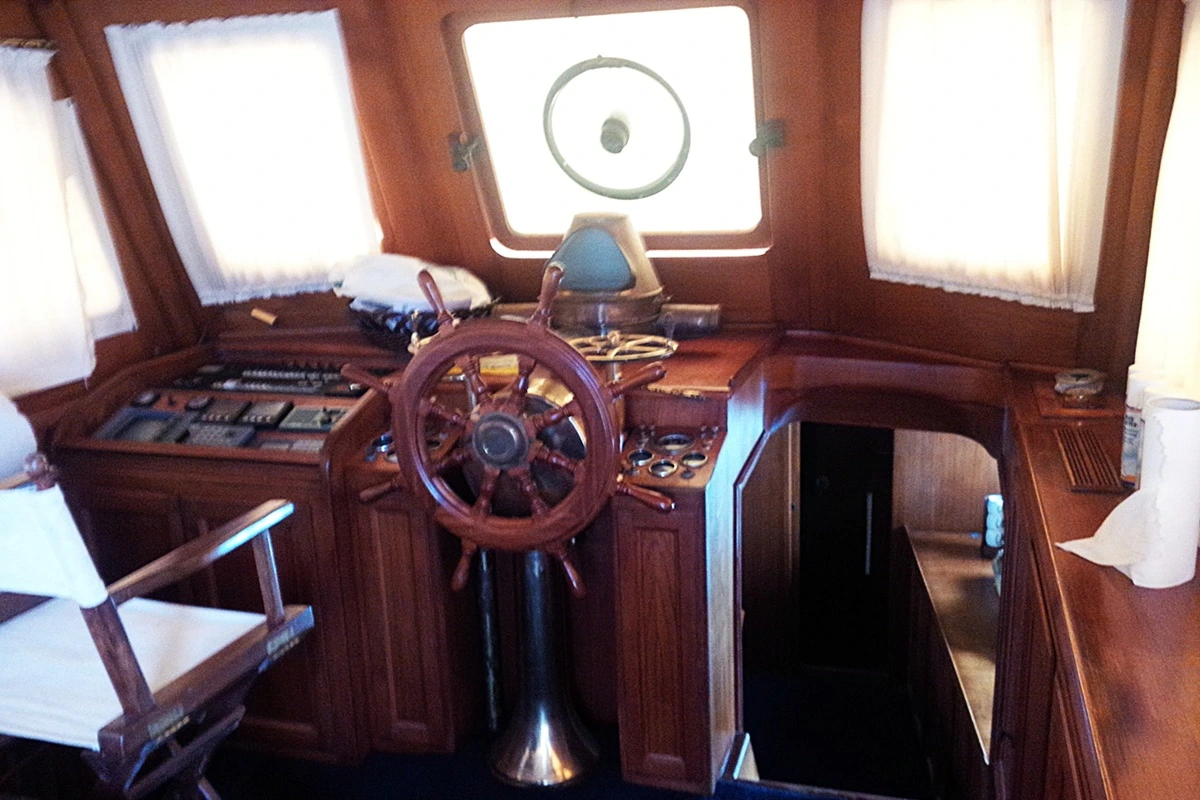
One of the most distinctive features of Posidonia is her original deck house, entirely finished in teak and designed as a panoramic wheelhouse and chart room. The original helm arrangement is particularly evocative, with two horizontal bronze wheels operating the engine reverses through cable transmissions – an unusual detail that perfectly reflects the character and ingenuity of 1930s yacht construction.
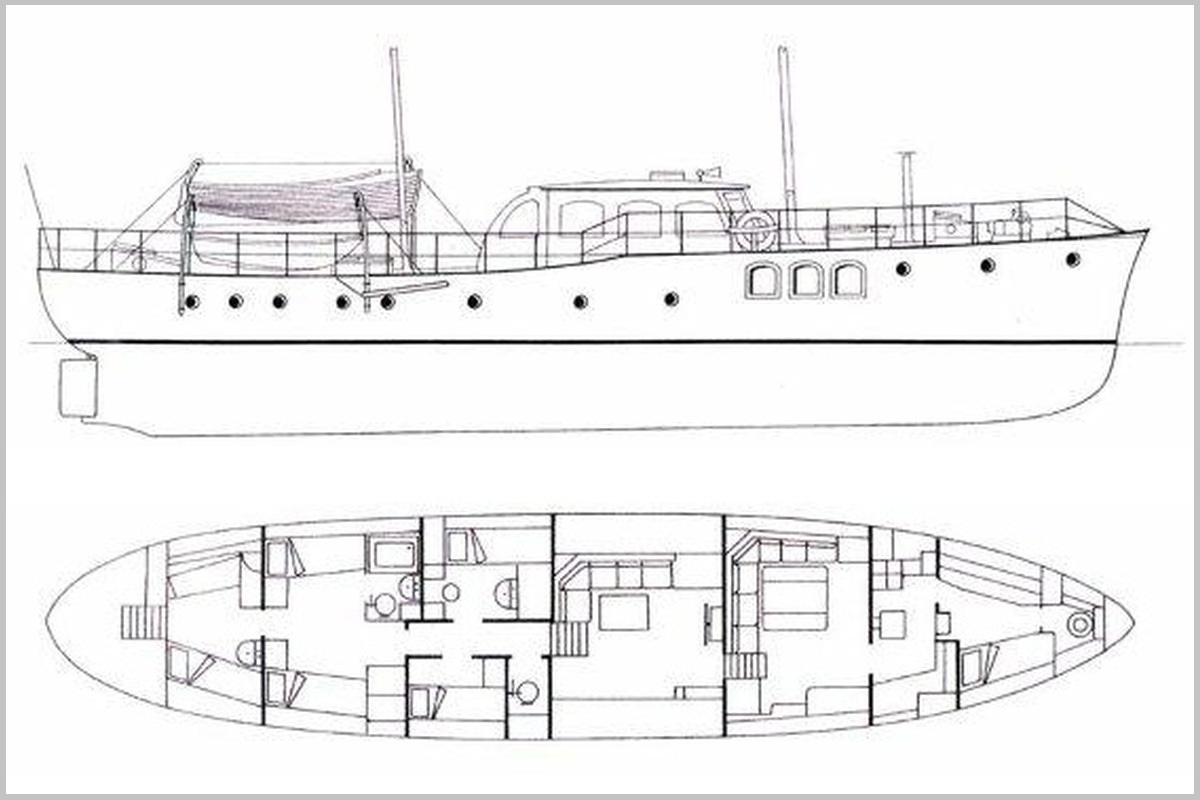
The interior arrangement follows the traditional principles of the period. A raised deck house separates the forward and aft accommodation areas, while the interior spaces feature generous proportions, natural materials and carefully crafted joinery. Following her historic restoration, the interiors were finished entirely in teak, with original furniture and details either preserved or reconstructed from the original drawings.
Technically, Posidonia was designed as a capable long-range yacht, with a low centre of gravity, moderate draught and two engines. Her original design also incorporated two masts with auxiliary sails, intended both for propulsion in an emergency and to provide additional stability.